Autisitc Observation: Bullying and Special Interests

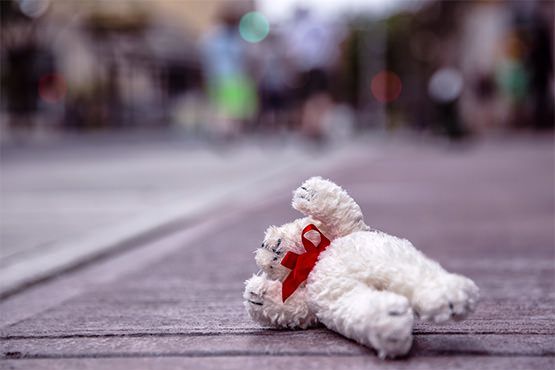
Image of a road with a lone white plush teddy bear, wearing a red ribbon, in the foreground. A group of people, doing other activities, are in the blurry background

I have found that the worst thing about being autistic is not about being on the spectrum, but rather how allistic (non-autistic) people treat you. I experienced awful forms of ableism, emotional abuse, and bullying directed towards me simply because I am an autistic person. Upon reading the experiences of my friends and peers on the autistic spectrum, this is unfortunately a common experience, making bullying and autistic childhood experiences go seemingly hand-in-hand.

Unfortunately, bullies do not go away when you get older: their tactics just change into something more insidious and covert. The type of bullies that I encounter tend to be thoroughly aware that autistic people will not immediately pick up on subtler forms of bullying, and use this to their advantage. As a result, autistic people may leave a conversation feeling hurt but with no ‘justifiable’ reason to explain these emotions. After all, the person we were just talking to did not say anything really hurtful to us, and they were smiling and putting on the big ‘friendly’ face that means the person is nice and honest. But every time you talk to that person, you find yourself feeling crappier with each encounter, even though you cannot determine the cause for this feeling.

Read more

Needs More Love: “The World Beyond My Shadow”

[Panel One: Schreiter’s left foot is shown walking into the panel. Her shadow is light and slightly noticeable Panel Two: The text box reads “And one I leave the door…” Schreiter stops walking, her shadow is visible in front of her. Panel Three: Schreiter’s antenna make a “Flopp” sound, as they disappear into her head. These are a visual cue that she uses to identify autistic people, emphasizing the metaphor that autistic people feel like aliens in the neurotypical world Panel Four: The text box reads “…I start.” Schreiter stands alone on the sidewalk in the center of the panel, which is a wide shot, emphasizing how small and insecure she feel when stepping ‘beyond her shadow’. Her eyes are wide and uncertain. Her shadow is at its darkest and most visible]
[Panel One: Daniela Schreiter’s left foot is shown walking into the panel. Her shadow is light and slightly noticeable Panel Two: The text box reads “And one I leave the door…” Both of Schreiter’s feet are present in the panel.  She has stopped walking, her shadow is visible in front of her. Panel Three: Schreiter’s antenna make a “Flopp” sound, as they disappear into her head. These are a visual cue that she uses to identify autistic people, emphasizing the metaphor that autistic people feel like aliens in the neurotypical world. Panel Four: The text box reads “…I start.” Schreiter stands alone on the sidewalk in the center of the panel, which is a wide shot, emphasizing how small and insecure she feel when stepping ‘beyond her shadow’. Her eyes are wide and uncertain. Her shadow is at its darkest and most visible]
Comic books are one of my greatest passions.  I read comics almost every day, and even if I am not reading them I am certainly thinking about them.  I love the versatility that the medium has to tell different types of stories, both fictional and personal, and how they showcase diverse ways of being to the audience before them.  I am especially happy to see more narratives, especially those which have previously been ignored or untold, gaining more interest and attention.  One example of this is the growing number of comics and graphic novels focused on examining and discussing the topic of neurodivergence and mental illness.

Among my favourite examples of a comic that has accomplished this is Daniela Schreiter’s The World Beyond My Shadow, a graphic novel discussing Schreiter’s experiences of being a woman on the autistic spectrum.  Originally published, in German, by Panini Comics Deutschland as Schattenspringer: Wie es ist anders zu sein in 2014, the comic received an official English translation by Panini Comics in 2016.  The book is a graphic memoir detailing Schreiter’s everyday life and childhood experiences as an autistic woman, specifically describing her experiences with sensory overload, navigating the confusing and contradictory social world of neurotypicals, and, most importantly, highlighting how much she loves being an autistic person.

Read more

Introductions

Hello and welcome to Autistic Observations! My name is Patricia Baxter and I am an independent writer, researcher, and media critic.  My writing has been published on various different sites, including I Need Diverse Games, Anime Feminist, FemHype, Take This, and GUTS Magazine. While I still wish to continue to write for websites and publications there are some occasions where the work I wish to publish does not fit their criteria, due to niche personal interests and topics, or because the piece is more casual than the standard essay format. For these reasons I have decided to create Autistic Observations, as a space for me to write out my thoughts and feelings on a number of topics that I feel cannot be properly expressed elsewhere.

Read more

Patricia Baxter's Autistic Observations